The Uniswapiverse
Basically, how trading works on Ethereum.

It all starts with identity and ownership, a place (address) to send and receive things. The next step is trading, how to change one thing into another. This is where Uniswap comes in.

Uniswap started in 2018 and is now an essential element of the Ethereum universe. It lets users trade without needing to trust anyone in the middle, which is possible because of smart contracts, code on Ethereum that always runs as programmed. Fast forward to today and Uniswap has “processed over $2.75 trillion in trading volume, with zero hacks” and created a complete user experience from wallet to application to chain.
Money pools
Uniswap lets anyone swap from one token to another. You can go from ETH to your favorite dog coin to that token your cousin told you about, and back, easily, quickly, cheaply. All possible because of pools.
Each pool is its own market. Each pool is made of two tokens. For example, ETH and USDC. When the pool is first created, a price is set between the two tokens. For example, if we started a new ETH/ USDC pool today, the price would be 2600 USDC per 1 ETH.
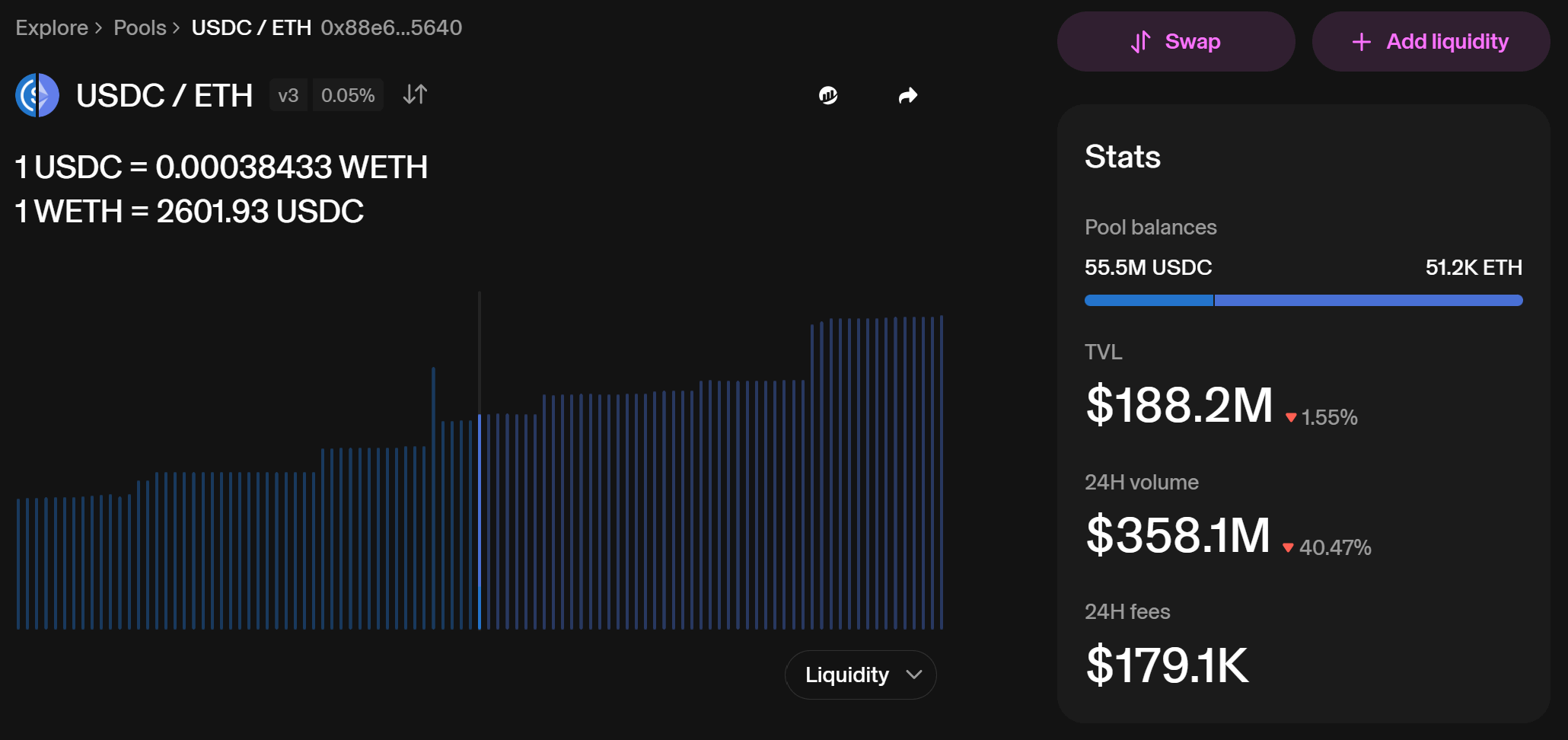
Each time someone buys USDC from the pool, they have to sell ETH to it, which means the pool now has less USDC and more ETH than it had before the trade, so the price of ETH goes down. When someone does the opposite, buying ETH, which takes it away from the pool, and selling USDC, which adds it to the pool, the price of ETH goes up.
When you trade on Uniswap, you don’t trade with a person. That would be a centralized exchange. Instead, you trade with a pool controlled by a set of rules enforced and guaranteed by the decentralized network that is Ethereum.
Swapping and trading
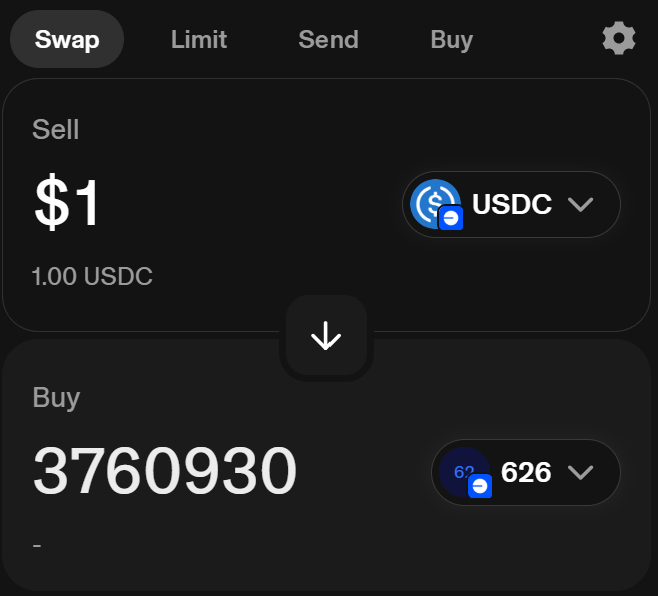
Because this is Ethereum, anyone can create a pool, or add tokens to an existing pool to earn fees, or create new tokens (more on this in the next one) to go in a pool. For example, your cousin Ki Chong created the 626 token, which you can get today for the low price of over 3.7 million tokens for one dollar. Uniswap won’t judge you for wasting money on this token, and to complete the trade, it goes through all the pools in its universe to find the cheapest path from that precious dollar to that stupid token.
2manychainz
There are many chains on Ethereum. These chains are also known as networks or Layer 2s or rollups. Each chain is independent and slightly different, but connected to the same basic timeline, rules, and language of the Ethereum Virtual Machine (EVM).
The problem with having all these chains is separation. Each chain needs its own money pool for each pair of tokens so even though the chains are connected, they are not connected enough to share liquidity. And the more liquid a market is, the less a single trade will change the price. Imagine jumping into a tiny, kids pool. If you’re reading this, you’re probably an adult and you already know this would be highly inappropriate because you would spill water over the sides and ruin it for the kids. Now imagine a giant Vegas-style swimming pool. No one would notice if you jumped in that pool because it’s bigger, there is way more liquid to absorb your cannonball. Basically, more liquidity means less disturbance for other people. The goal for Unichain is to connect all the liquidity. Let the money pools flow into each other even if they are on different chains so we get a more fluid experience for trading and swapping.
If anything is confusing, ask EthereumGPT, it’s free and should mostly talk like a normal person.
Level 2: Decentralized Exchange (DEX)
Uniswap
Uniswap is a decentralized exchange that lets users swap tokens without anyone in the middle.
Token
Coins, numbers, points; money created on a blockchain. Anyone can create tokens.
Swaps
Trading one token for another. On decentralized exchanges like Uniswap, you don’t trade with another person, you trade with a pool of tokens.
Pool
Tokens swim in a liquidity pool, waiting for someone to buy them. The more the pool is worth, the more liquid it is, and the less the price will change with each trade.
Smart Contract
Rules on Ethereum written in code that automatically does what it is programmed to do.
USDC
A popular “stablecoin” designed to be always worth $1 dollar. Other stablecoins include DAI and USDT.
Ethereum Virtual Machine (EVM)
The EVM is a shared set of rules and logic among different blockchains. EVM chains are highly compatible with each other.
For more on why this matters, read Ethereum Papers: Why the Blockchain Matters